
Street Performer & Living Statue Tipping Guide 2026
Learn how much to tip a street performer or living statue in 2026. Discover the etiquette of QR code tip jars and busker tips for a world-class experience.
Quick answer
Learn how much to tip a street performer or living statue in 2026. Discover the etiquette of QR code tip jars and busker tips for a world-class experience. Performance art is a demanding profession that relies heavily on spontaneous audience appreciation, usually in the form of a street performer tip. In today's landscape, a standard busker tip for a three-to-five-minute interaction ranges from $2 to $5, while high-production acts often see $10 to $20 from groups or families.
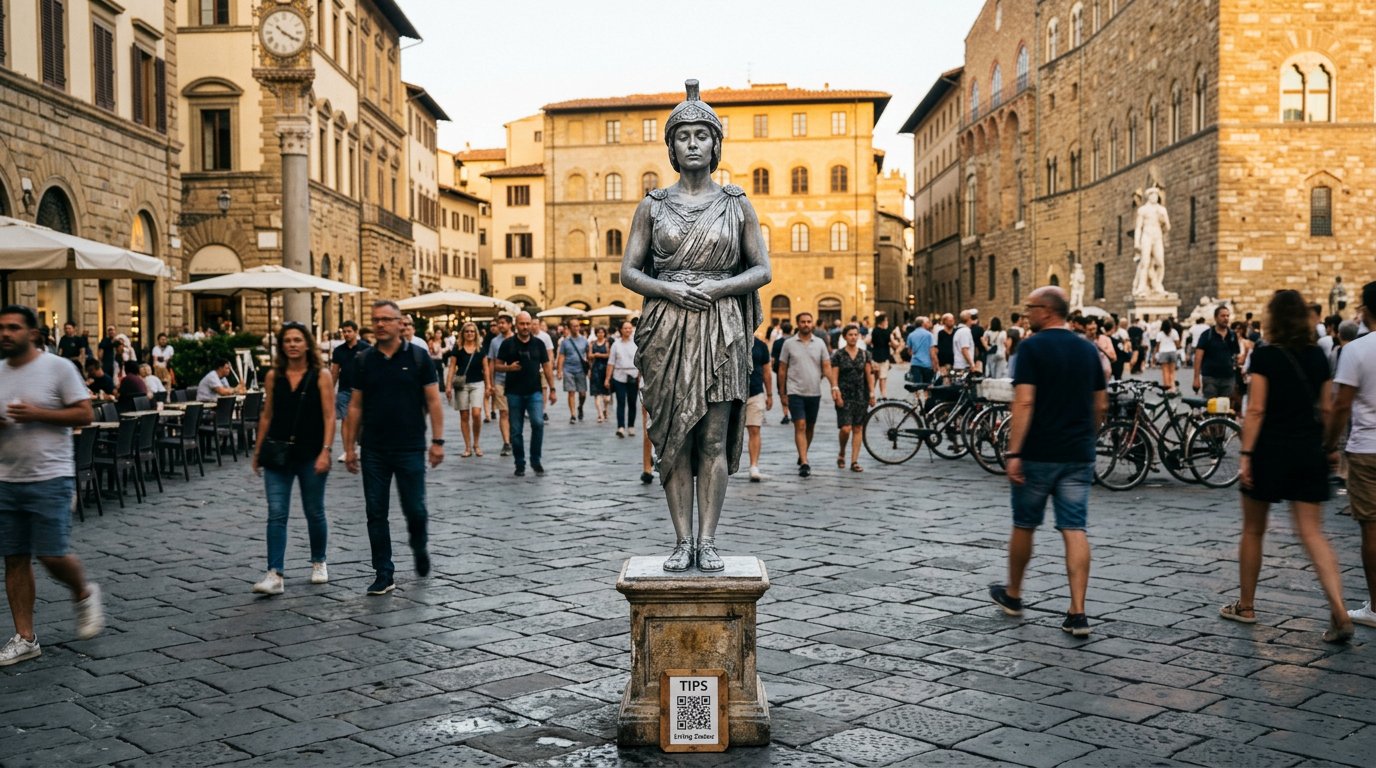
Performance art is a demanding profession that relies heavily on spontaneous audience appreciation, usually in the form of a street performer tip. In today's landscape, a standard busker tip for a three-to-five-minute interaction ranges from $2 to $5, while high-production acts often see $10 to $20 from groups or families. As urban centers move toward cashless infrastructure, performers must adapt their collection methods to ensure they remain profitable in an era where fewer people carry small bills.
Why Street Performers are Under-Tipped in a Cashless Economy
The "empty pockets" phenomenon is the primary threat to the busking industry. For decades, the success of a living statue or street musician depended on the spare change in a passerby’s pocket. In 2026, over 40% of consumers report carrying no physical cash at all. When an audience member enjoys a performance but realizes they lack five-dollar bills, they often walk away without contributing, leading to a significant loss in potential revenue.
Living statues face an additional challenge: the "stasis" of their performance makes it difficult to actively solicit tips without breaking character. Unlike a musician who can thank a donor mid-song, a living statue relies entirely on the visibility and accessibility of their tip jar. If that jar only accepts cash, the performer is essentially invisible to the digital-first consumer. Understanding tipping etiquette 2026 guide standards is essential for both the performer and the audience to bridge this gap.
How Much to Tip a Street Performer or Living Statue
Tipping for street art is not just about charity; it is a direct payment for a professional service. Use these concrete ranges to determine a fair street performer tip:
* Quick Interaction ($1 – $3): For a short stop to watch a living statue move or a street performer’s brief gag.
* Standard Performance ($5 – $10): For someone who stays for a full 10-to-15-minute set or a family that takes photos with a performer.
* Specialty/High-Skill Acts ($10 – $20): For complex circus arts, fire spinning, or highly detailed living statues that require hours of makeup and costume prep.
* Group Tipping: For families or tour groups, a collective tip of $10 to $20 is considered standard professional courtesy.
If you are a performer, providing pricing transparency or suggesting levels can actually increase the average gratuity by removing the guesswork for the audience.
5 Strategies to Increase Your Busker Tips
Increasing your earnings as a street performer requires a blend of showmanship and modern financial tools. Here are five proven strategies to maximize your hourly rate.
1. Set Up an EZTipr Page with a QR Code
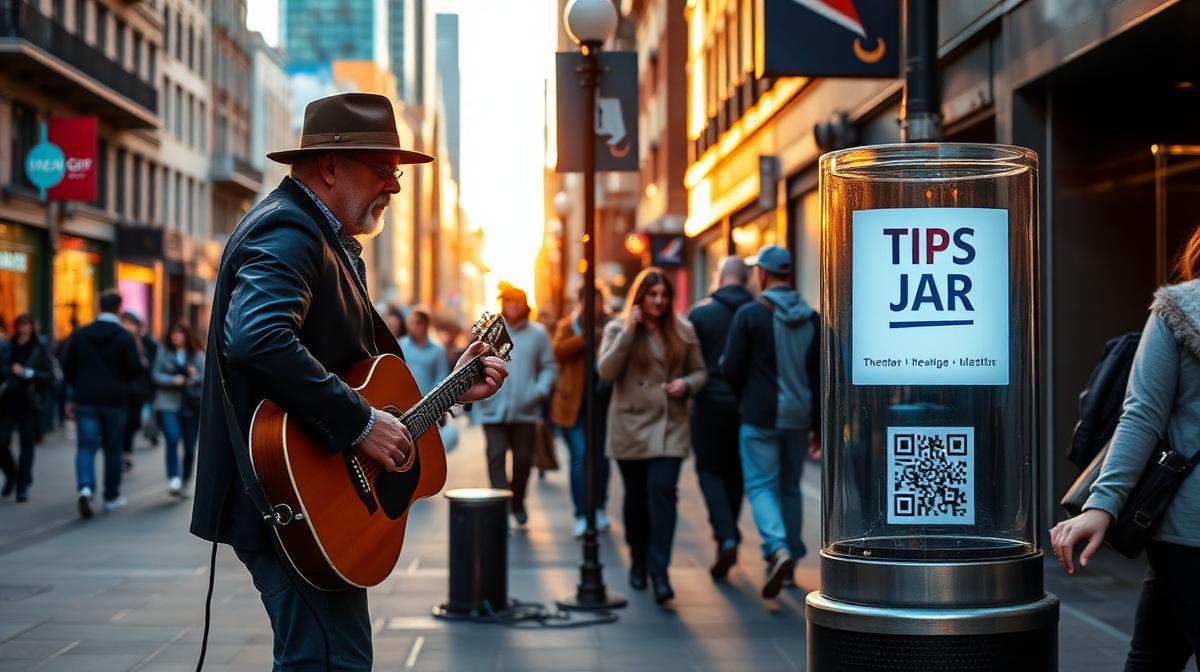
The most effective way to capture lost revenue is to offer every possible payment method instantly. By creating an EZTipr page, you allow fans to tip via Venmo, Cash App, PayPal, Zelle, and Apple Pay through a single link. Place your unique QR code on your sign or tip jar. This eliminates the "I don't have cash" excuse and often results in higher average tips ($5+ digitally vs. $1 in change).
2. Physical Placement and "Seeding" the Jar
The placement of your tip jar is critical for a living statue or busker. It should be at waist height or slightly below, clearly visible but not obstructing the performance. "Seeding" the jar with a few five and ten-dollar bills signals to the audience that these are the expected amounts. People are more likely to mirror the behavior they see reflected in the jar.
3. Use a QR Pin or Wearable Signage
For living statues, movement is limited. Instead of relying on a floor-based sign, wear your QR code. An EZTipr QR pin or a small, aesthetically integrated plaque on your costume allows people to tip while you remain in character. This is particularly effective for performers who attract "drive-by" photographers who take a picture and keep walking.
4. Direct Call to Action (The "Hat Pitch")
If your act has a beginning, middle, and end, you must include a "hat pitch." Explicitly mention that you accept digital tips. Mentioning that you use a QR code tip jar performer system and pointing to your sign can increase digital contributions by up to 50% compared to remaining silent.
5. Engage with High-Value Patrons
While the general public provides the volume, high-value patrons (tourists, event organizers) provide the growth. If someone tips a large amount, acknowledge them. If you are a magician or a mentalist, refer to our magician-entertainer tips guide for specific ways to turn a high tip into a private booking.
What Doesn't Work: Tipping Traps to Avoid
* Aggressive Solicitation: Guilt-tripping the audience rarely works long-term. It may gain a one-time dollar, but it ruins the atmosphere and discourages people from staying for the full show.
* Dirty or Overflowing Buckets: If your tip bucket looks like a trash can or is overflowing with coins, it suggests you have "enough." Keep it organized and clear out smaller coins periodically.
* Static Signs Without Tech: A sign that only says "Tips Appreciated" is no longer enough. Without a digital option, you are ignoring the fastest-growing segment of the economy. This is also true for other niche performers, such as those in the tarot-reader-psychic-tipping-guide-2026 category.
Real Numbers: The Impact of Digital Tipping
Performers who transition from cash-only to a hybrid model (Cash + EZTipr QR code) see a measurable increase in daily earnings. Data shows that the average physical tip is approximately $1.45, while the average digital tip via QR code is $6.30. By making it easier for an audience to use their phone, you are effectively tripling your income per interaction.
Furthermore, digital tipping platforms provide a "paper trail" for your earnings, which is beneficial for street performers looking to track their best locations and times of day. By analyzing which spots generate the most QR scans, you can optimize your schedule for maximum ROI.
Get Started with EZTipr
Stop leaving money on the sidewalk. As a street performer or living statue, your art deserves to be compensated fairly, regardless of whether your audience is carrying a wallet. Creating a professional digital presence takes less than two minutes and ensures you never miss a living statue gratuity again.
Frequently asked questions
How much does EZTipr cost?
The free plan is $0 and includes a tip page, a QR code and 1 payment method. Pro is $0.99 per month or $9.99 per year, which is 2 months free, and adds unlimited payment methods, themes, full analytics and removes EZTipr branding. Every new individual signup starts with a 7-day free Pro trial and no credit card is required.
Does EZTipr take a cut of tips?
No. Tips go directly from the guest to the worker inside the guest's own payment app. EZTipr never touches the money and charges 0% on tips.
Which payment apps can a tip page use?
Cash App, Venmo, PayPal, Zelle and Apple Pay, plus any custom payment link. Zelle and Apple Pay are copy-only so the handle stays private.
Related Articles


Ready to Earn More Tips?
Create your free tip page in under 60 seconds. No credit card required.
Get Started Free →